
Dunhuang & Jiuquan Silk Road Travel Guide
Two cities, one legendary corridor. Plan your journey through the Silk Road's heart — Mogao Caves, Jiayuguan Fort, Crescent Lake, the Gobi. Honest advice from people who have been there.
The high-speed train connects both cities in just 2.5 hours. Budget from CNY 500/day.
Chinese Name
敦煌 & 酒泉
Dunhuang & Jiuquan
Province
Gansu
Northwest China
UNESCO
Mogao Caves
Since 1987
Distance Apart
400 km
Hexi Corridor
High-Speed Train
2.5 hours
CNY 150-200
Best Season
May-Jun, Sep-Oct
15-28°C
Budget/Day
CNY 500-1200
USD 70-170
Recommended
4-7 days
For full experience
One Trip, Two Very Different Cities
The Hexi Corridor · 河西走廊
Fly into one, out of the other — that's how most travelers do it. Dunhuang is the art stop: the UNESCO-listed Mogao Caves, a millennium of Buddhist murals, dunes you can slide down at sunset, a desert oasis. Jiuquan is the frontier: Jiayuguan Fort, the last stronghold of the Ming Great Wall (1372), and China's satellite launch center.
The two feel nothing alike — art and desert versus military history and space — which is why doing both never gets repetitive. The split that works for most trips: 3 days Dunhuang, 1-2 Jiuquan, connected by the 2.5-hour high-speed train.
Firsthand, season after season. Every price and tip below was verified at the gates in July 2026.
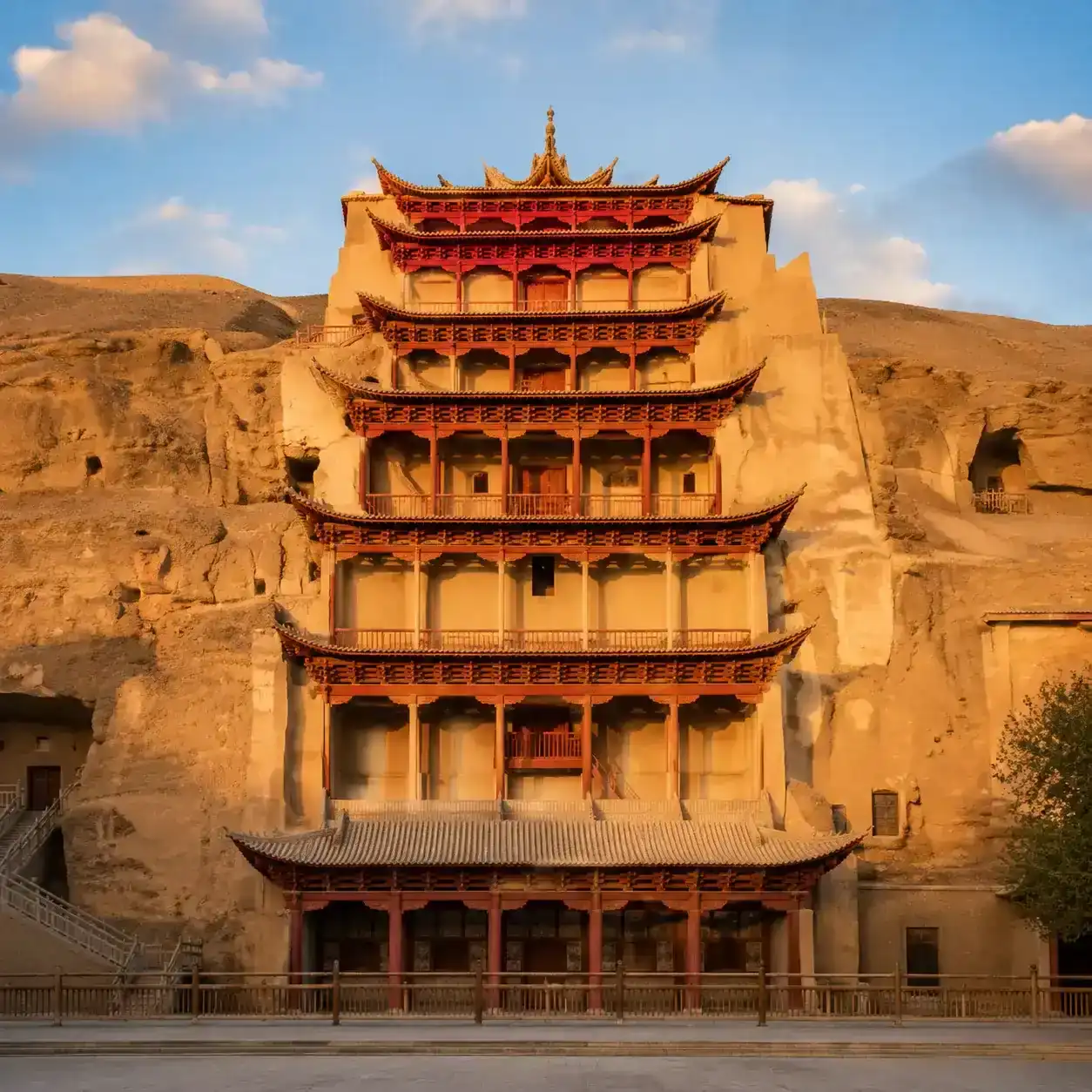
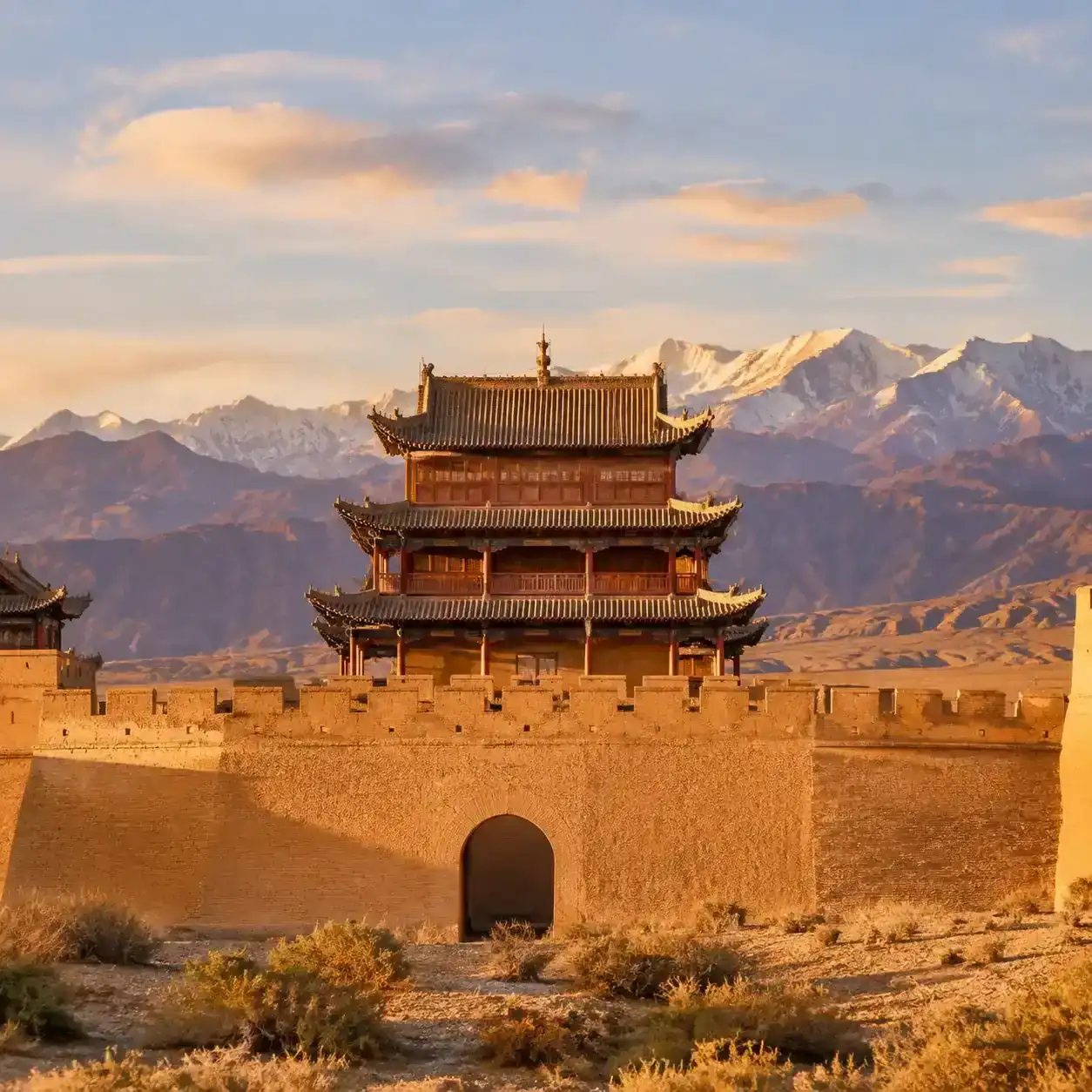
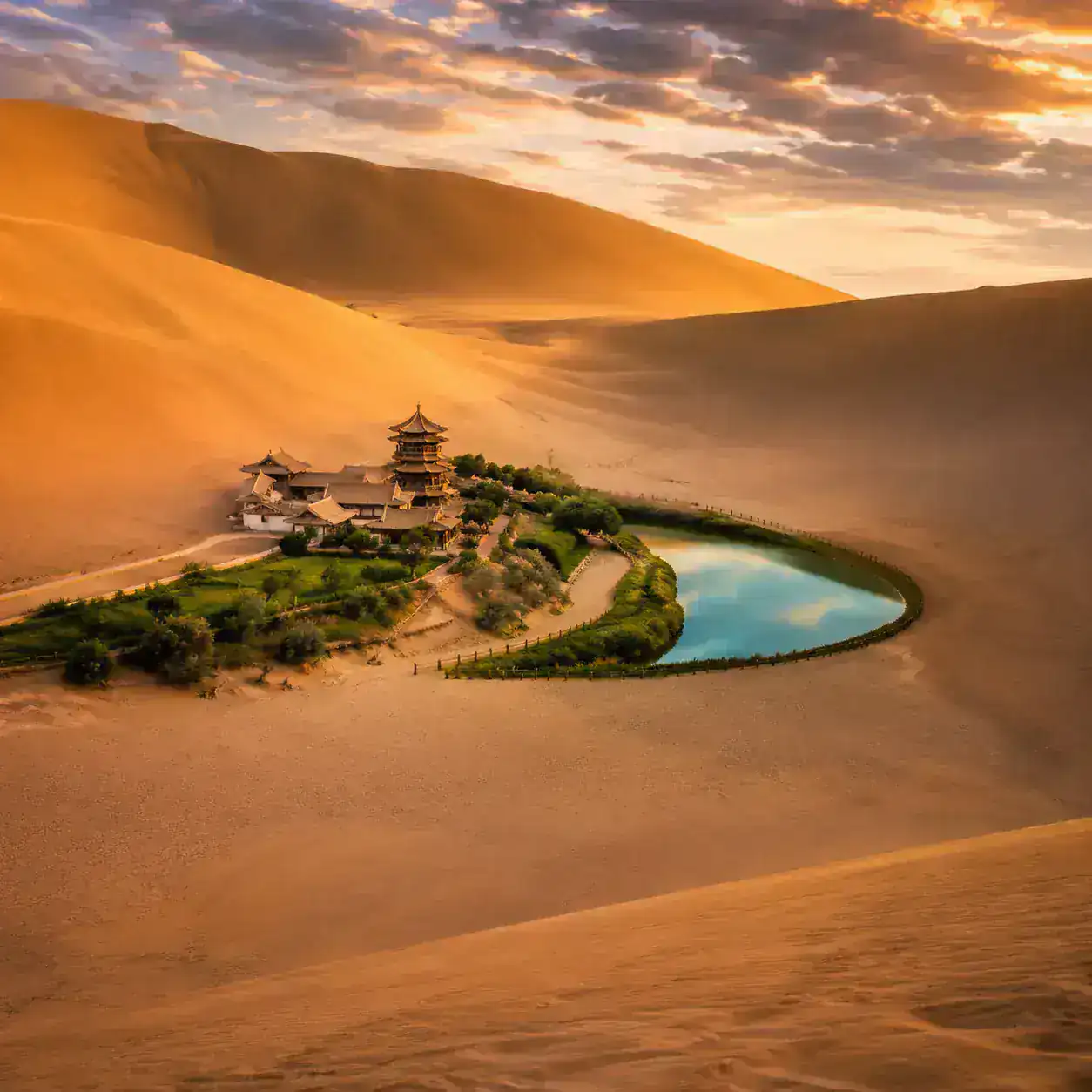
Dunhuang and Jiuquan are two cities in Gansu Province, China, linked by the Hexi Corridor — the narrow Silk Road passage between the Qilian Mountains and the Gobi Desert. Dunhuang holds the Mogao Caves and Crescent Lake; Jiuquan, together with neighbouring Jiayuguan, holds the western end of the Great Wall. A high-speed train connects the two cities in 2.5 hours.
At a Glance
Everything You Need to Know
The essentials, in one place.
Must seeTop Attractions Ranked
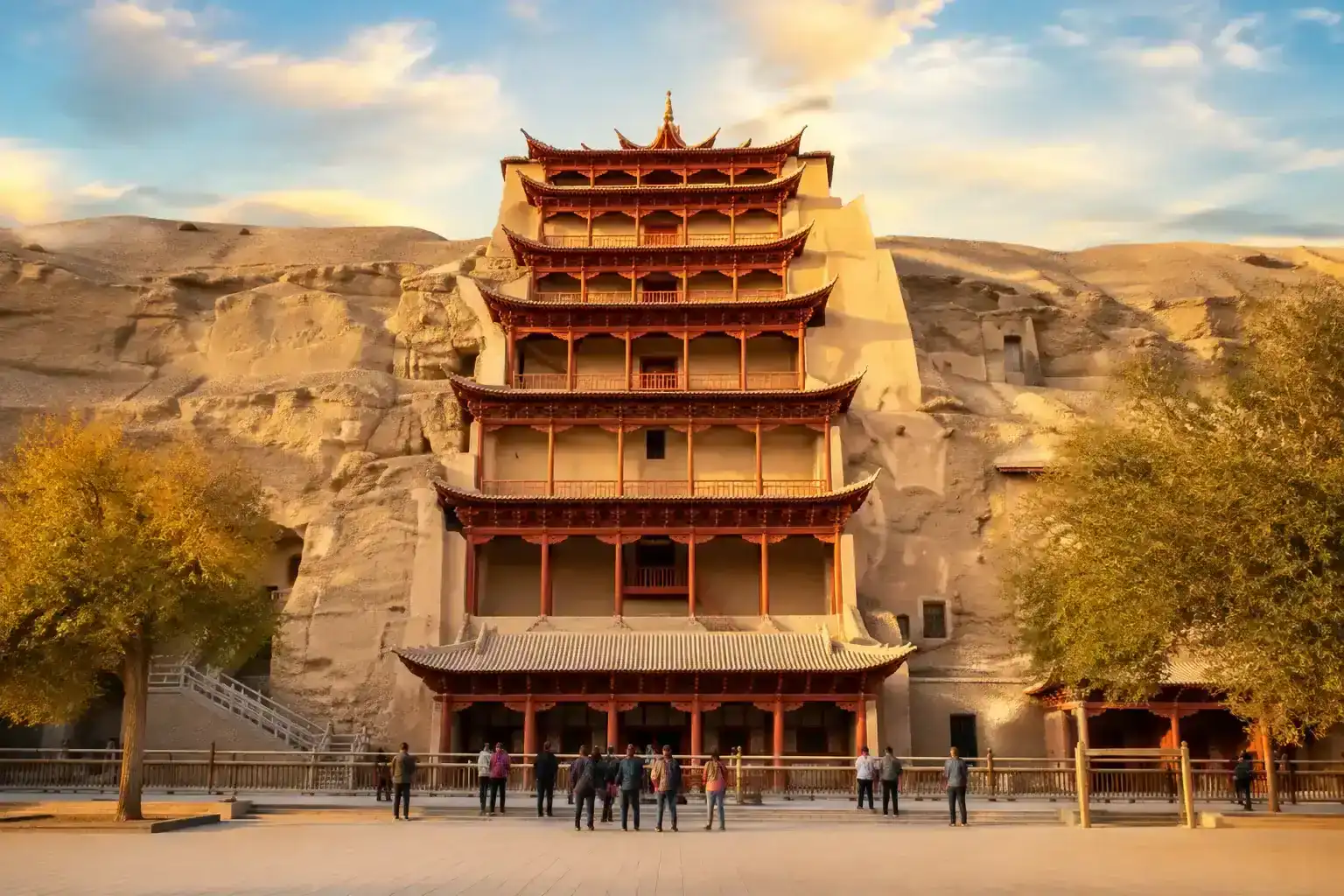
Mogao Caves — 492 cave temples, one UNESCO site. Guide.
Crescent Lake — desert oasis, camel rides, sunsets. Guide.
Jiayuguan Fort — the Great Wall's western end. Guide.
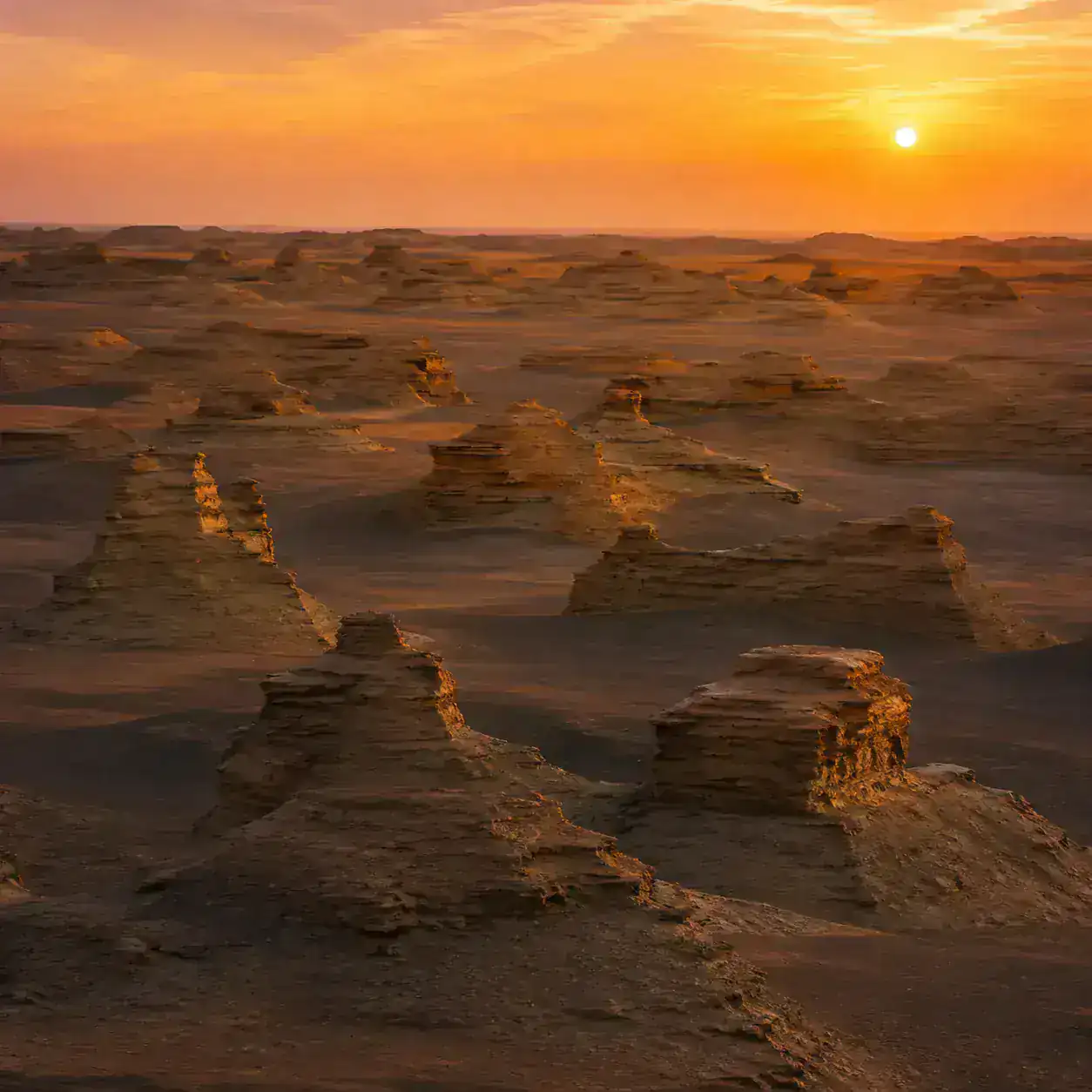
Yadan Geopark — wind-carved shapes, full-day trip. Guide.
Space Center — China's launch site. Book ahead.
 Prices verified
Tickets & Budget
Prices verified at attraction gates, July 2026.
Full ticket breakdown →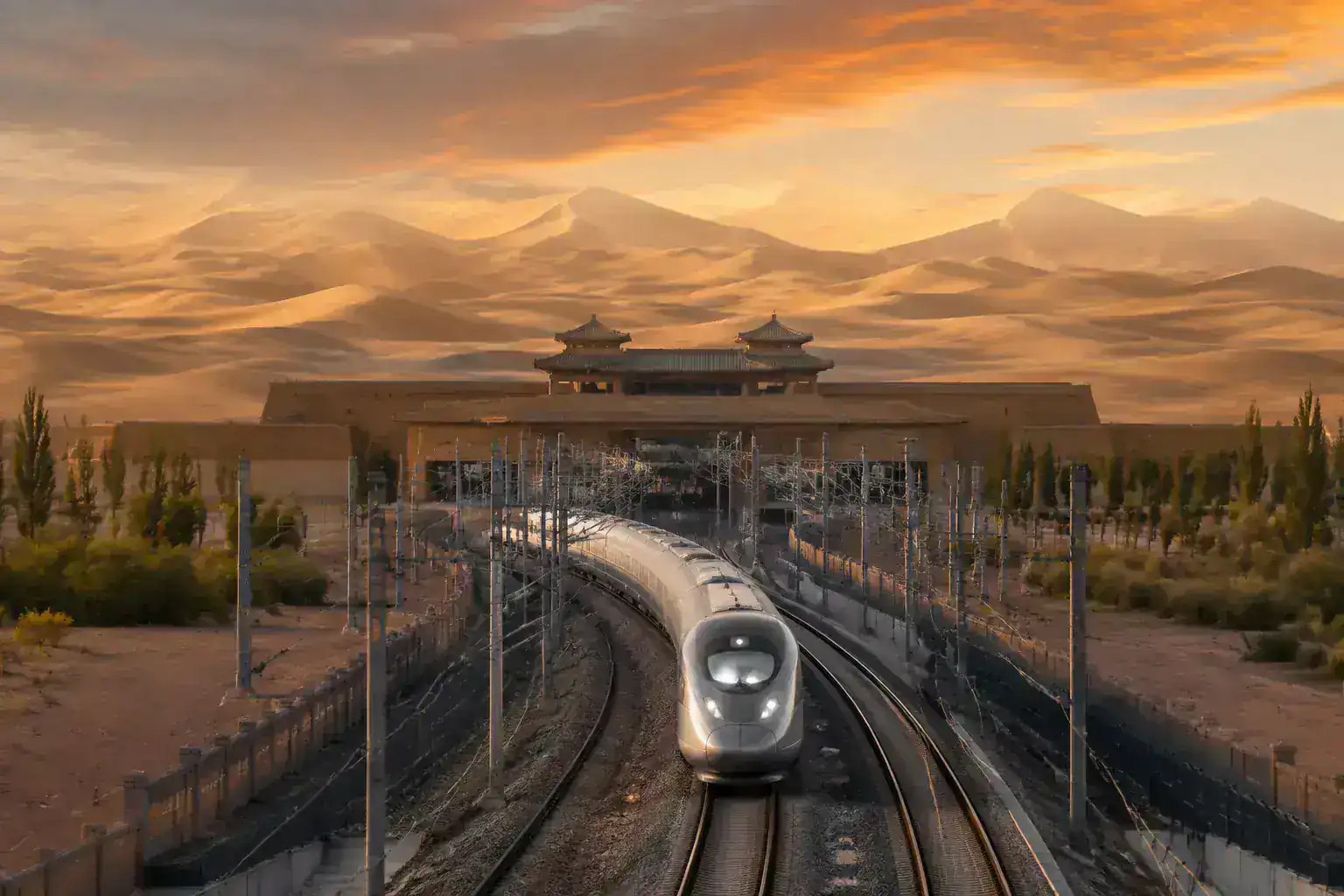 2.5h train
Getting Around
- ✈ Fly into Dunhuang (DNH) or Jiayuguan (JGN)
- 🚆 Train from Lanzhou: 6-8 hours, CNY 300-400
- 🚌 Between cities: 2.5h train, 10+ daily
- 🚗 Local: Didi. Centers walkable.
- 💡 Tip: fly to Lanzhou, train to Dunhuang — saves CNY 500-800.
When to Go
Pick Your Season
Each season on the Silk Road is a different trip.
Autumn (Sep-Oct) — The Best Season
September is magnificent: 15-25°C, golden light, clear skies. October is nearly as good — avoid the first week (Golden Week) when every site is overrun.


Dunhuang vs Jiuquan at a Glance
Two cities, two personalities. Here is how to split your time.
Vibe
Signature Attraction
Ideal Stay
Daily Budget
Best For
Dunhuang
Ancient oasis, backpacker hub
Mogao Caves
2-3 days
CNY 400-1200/day
History, art, desert, food
Jiuquan
Frontier fortress, quieter
Jiayuguan Fort
1-2 days
CNY 300-800/day
Great Wall, space, solitude
The 4 Big Attractions, Compared
Tickets, time, effort, photography — verified at the gates in July 2026.
| Compare | Mogao Caves | Crescent Lake & Dunes | Jiayuguan Fort | Yadan Geopark |
|---|---|---|---|---|
| Admission | CNY 238-258 (A) | CNY 120 (3-day valid) | CNY 120 (combined) | CNY 120 + CNY 70 shuttle |
| Time needed | 3-4 hours | 2-4 hours | 2-3 hours | Full day (180 km each way) |
| Book ahead? | Yes — 1-4 weeks in peak season | No | No | No (hire driver) |
| English signage | English guides provided | Limited | English museum labels | None |
| Photography | Banned inside caves | Excellent — sunset golden hour | Good | Best in Gansu — sunset only |
| Crowd level | Extreme in peak season | Heavy at sunset | Moderate | Quiet |
How to Get From Dunhuang to Jiuquan
Four ways to cover the 400 km between the two cities.
High-Speed Train
Duration 2.5 hours
Cost CNY 150-200
Frequency 10+ daily
Long-Distance Bus
Duration 5-6 hours
Cost CNY 60-80
Frequency 4-6 daily
Private Car
Duration 4-5 hours
Cost CNY 600-900
Stops Anywhere
Flight
Duration 1 hour
Cost CNY 800-1500
Frequency 1-2 daily
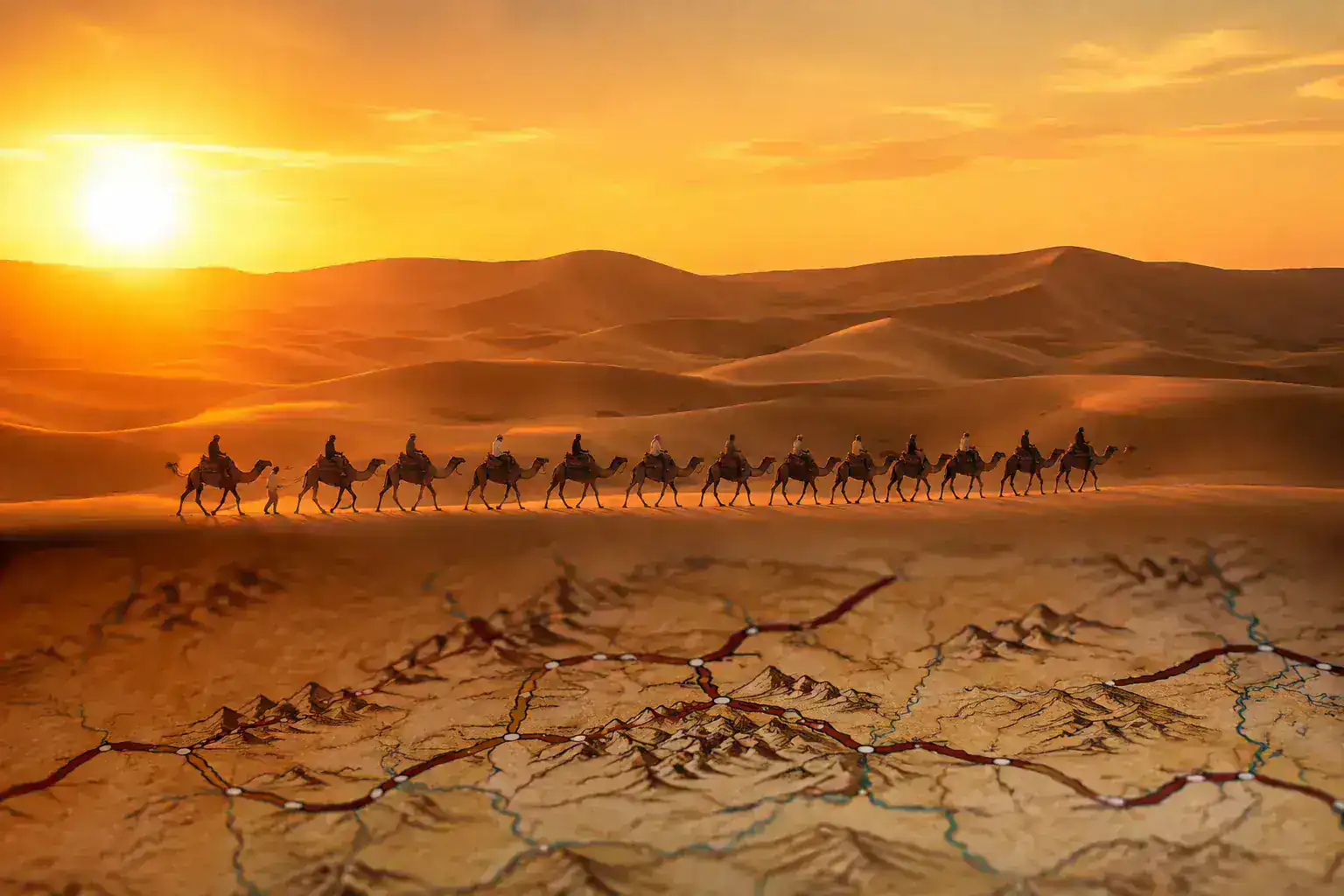
Silk Road Route Map
From Dunhuang through Jiuquan to Zhangye along the Hexi Corridor.
Dunhuang
敦煌
Jiuquan & Jiayuguan
酒泉 · 嘉峪关
Zhangye
张掖
Build Your Itinerary
Pick your days, get a realistic plan.
Day 1: Mogao Caves & Desert
- Morning: Mogao Caves guided tour (book ahead)
- Lunch: Shazhou Night Market area
- Afternoon: Crescent Lake & Singing Sand Dunes
- Evening: Camel ride at sunset
- Stay: Dunhuang city center
Day 2: West Line
- Morning: Yumen Pass & Han Great Wall ruins
- Afternoon: Yadan National Geopark
- Evening: Try donkey-meat noodles
- Stay: Dunhuang
Day 3: Train to Jiuquan
- Morning: High-speed train to Jiuquan (2.5h)
- Afternoon: Jiayuguan Fort & Great Wall Museum
- Evening: Jiuquan old town, lamb skewers
- Stay: Jiayuguan or Jiuquan
Mogao Caves: The Complete Guide
Tickets, reservations, and how to make the most of one of the world's great Buddhist art treasures.
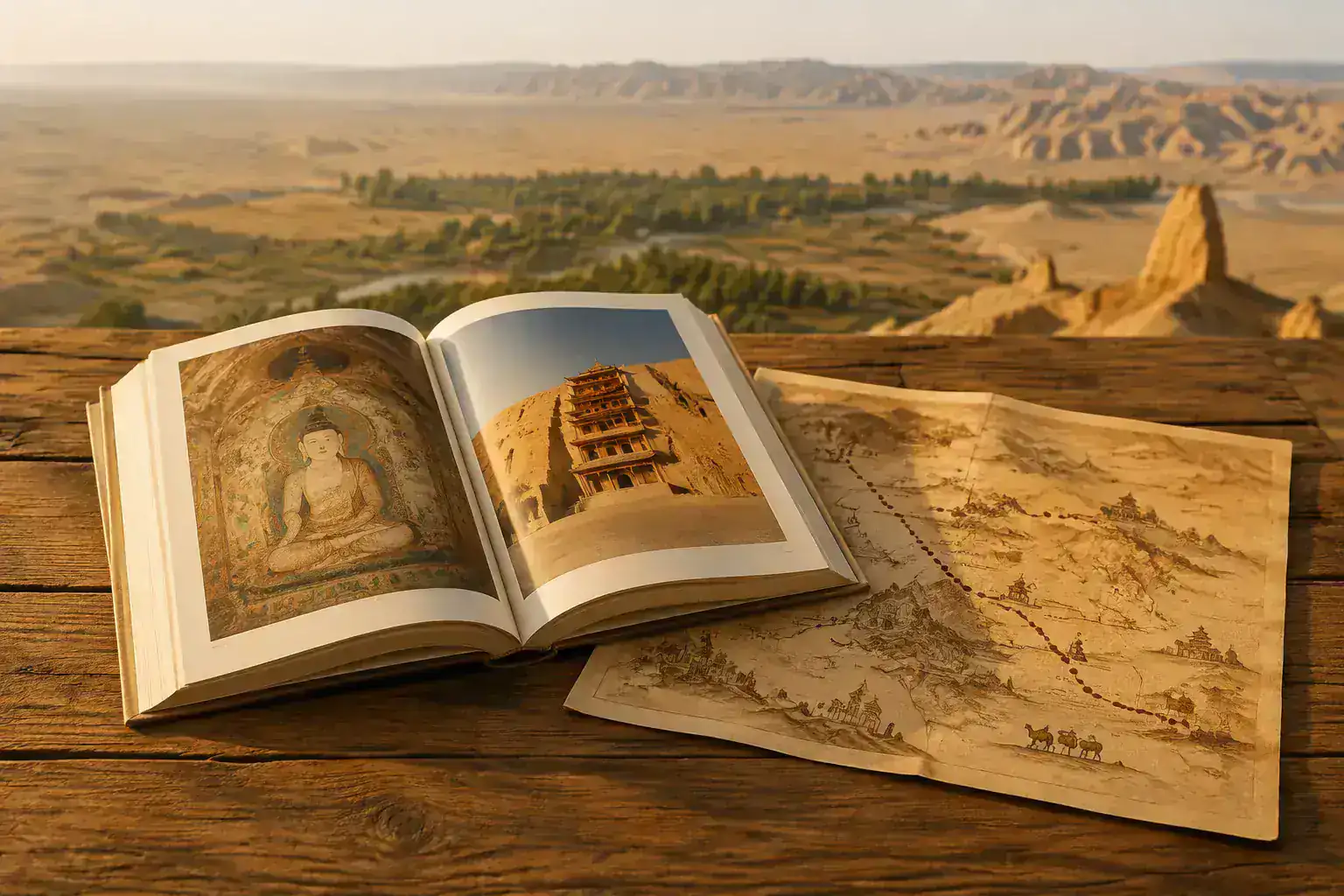
Mogao Caves — 492 cave temples, 1,000 years of Buddhist art
Practical Survival Guide
The things nobody tells you about Gansu.
Phone & Internet
China Mobile SIM at the airport. eSIM via Airalo or Nomad. VPN before you arrive; offline maps via Maps.me.
Money & Payment
Alipay linked to a foreign card covers almost everything. Cash for night markets. No tipping.
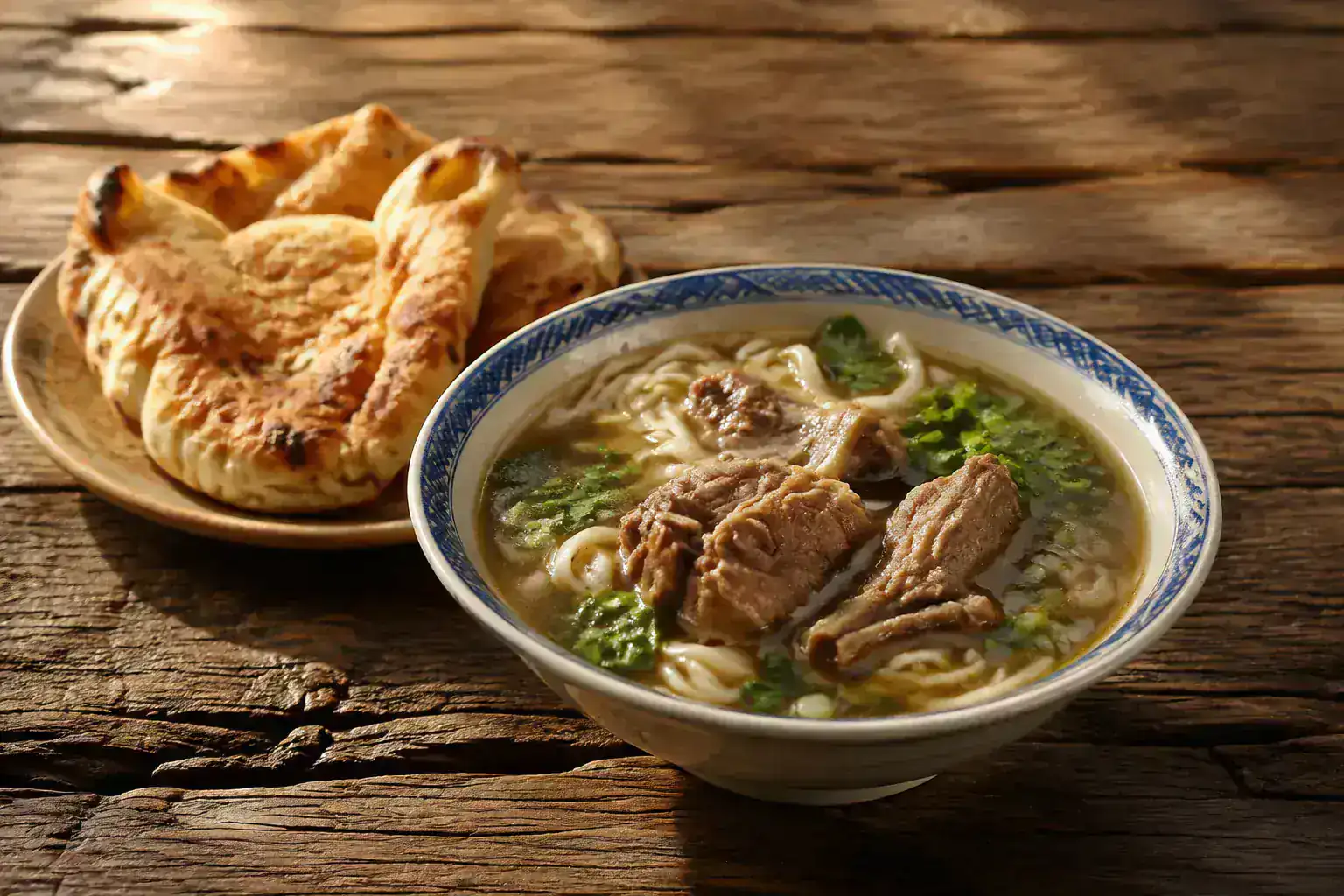
Food Survival
Donkey-meat noodles, lamb soup, apricot drink. Halal-friendly. Night market from 6pm. Food guide.
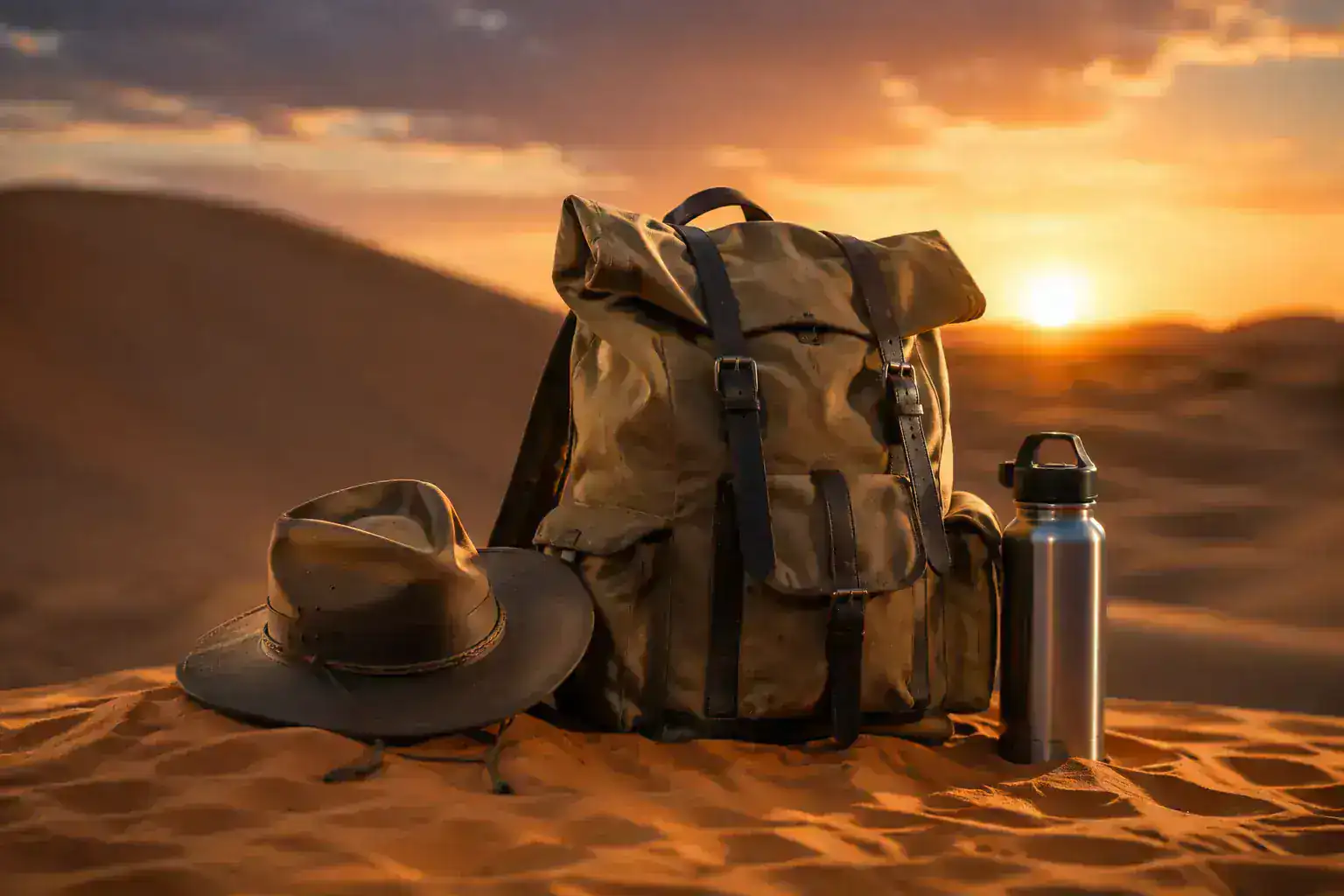
What to Pack →
Season-by-season packing for the Gobi — summer heat, winter cold, and 10 essentials.

Chinese Phrases →
30 essentials with pinyin, ready to show anyone. Works offline.
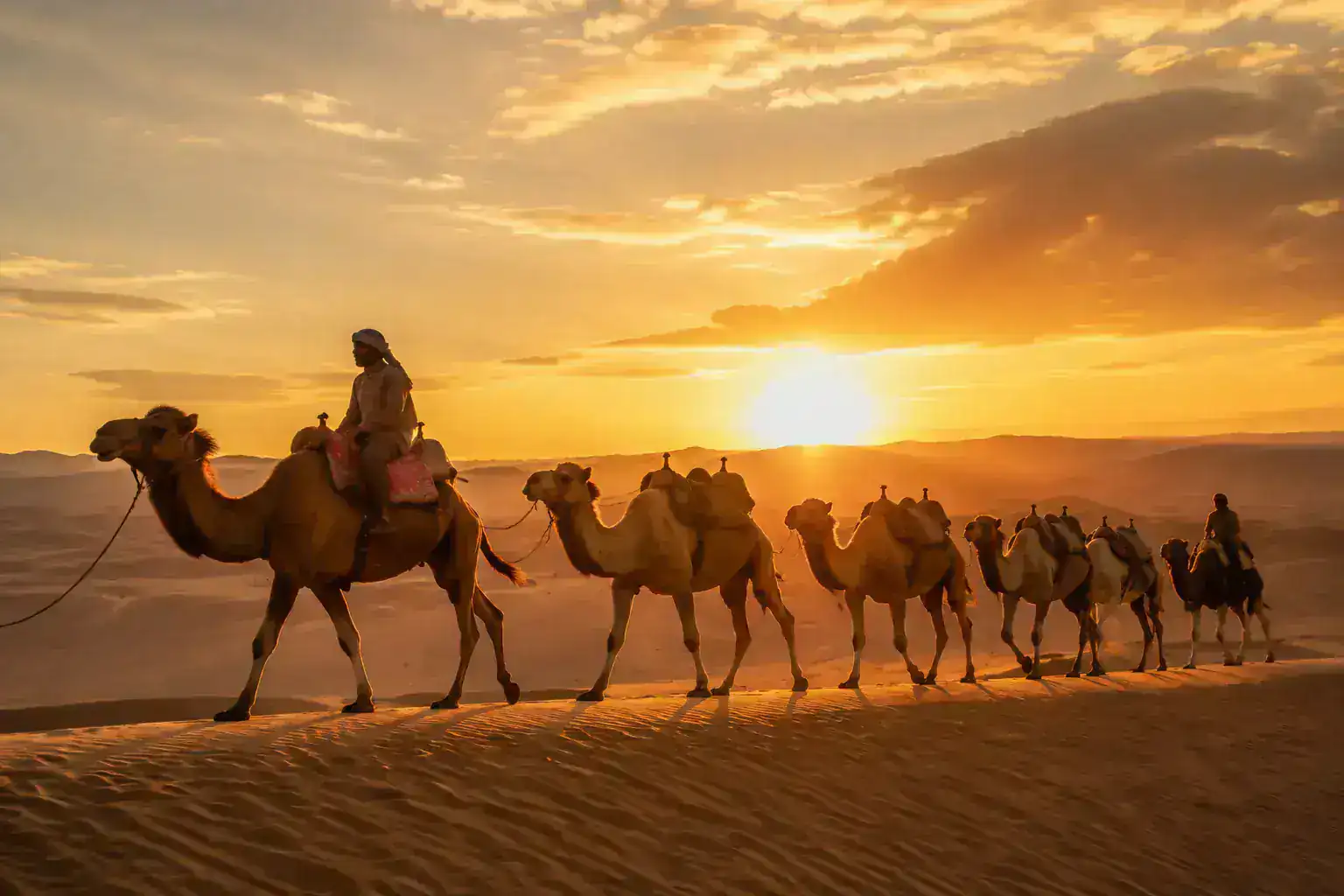
Getting Around Locally
Didi for taxis; walkable city centers. Private driver day trips, CNY 600-800. Always carry your passport.
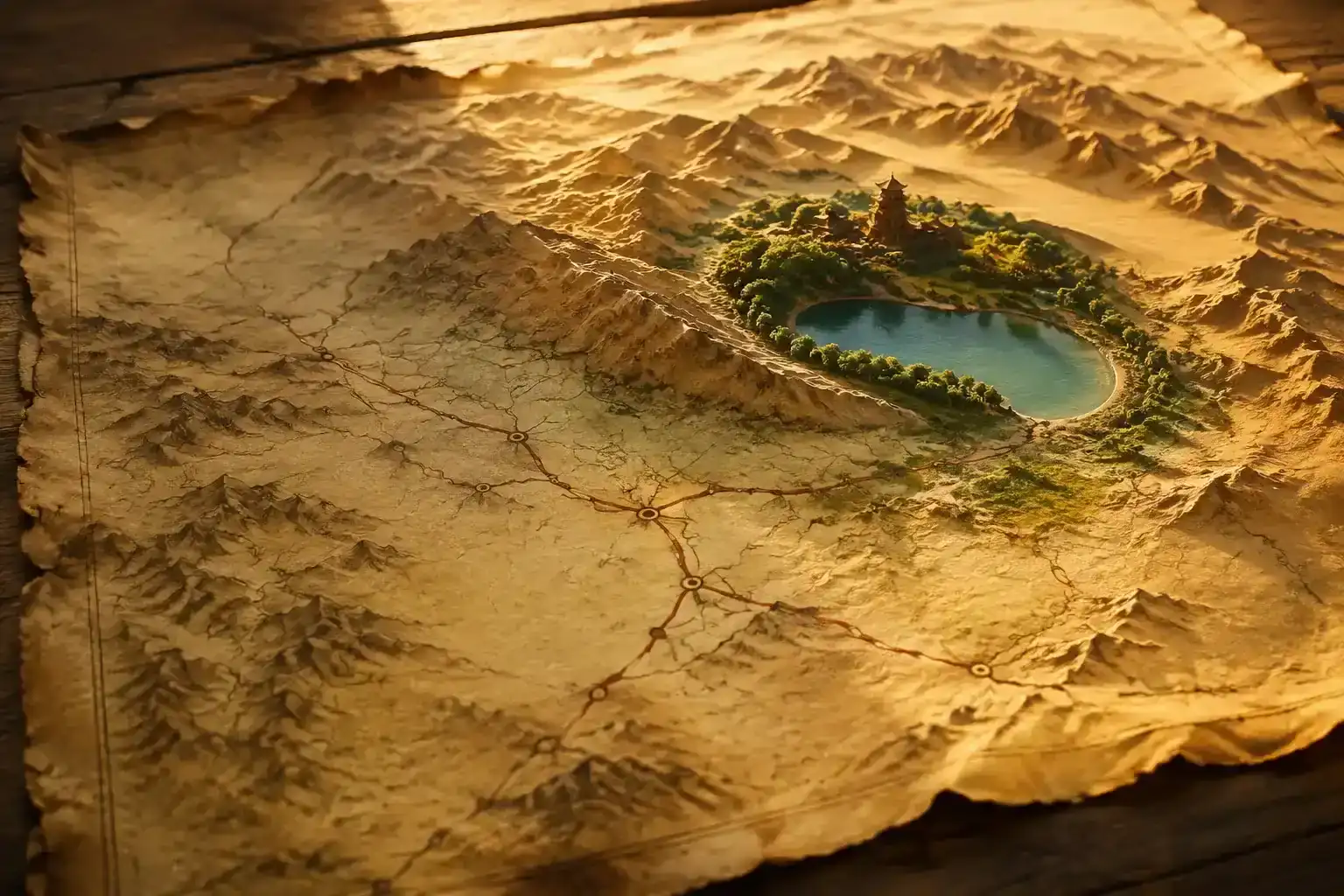
The Greater Silk Road Route
Dunhuang and Jiuquan pair naturally with nearby Gansu stops — each 1.5-3 hours by high-speed train, each completely different.
Dunhuang
Mogao Caves & desert
Jiuquan
Jiayuguan Fort & space
Zhangye
Rainbow Mountains
Lanzhou
Gateway to Gansu
Xi'an
Terracotta Warriors
Sample 10 days: Lanzhou (1) → Zhangye (1.5h) → Jiuquan (2, Jiayuguan Fort) → Dunhuang (3, Mogao + desert) → fly out. Compare destinations →
Written by the Dunhuang & Jiuquan Guide Team
We have explored the Gansu Corridor across multiple seasons since 2023. Every price below was verified in person in July 2026. No AI-written guides — everything here is firsthand.
Trust & Experience
Our Research Timeline
Documenting the corridor firsthand since 2023.
First Silk Road Explorations
Initial research trips across Gansu. We found most English info on Dunhuang outdated or wrong — a dedicated guide was needed.
Deep Research Phase
Visits in all seasons. Documented ticket booking, train schedules, restaurants, and hotels we actually stayed in.
The Slow Travel Year
Long stays in Dunhuang, Jiayuguan, and Jiuquan. Walked every trail, shot every attraction, built the route map from GPS tracks.
Guide Launch & Updates
Prices verified at attraction gates in July 2026. We return regularly — most recently less than a month ago.
Recently Updated
Fresh guides, verified prices.
Ticket Guide
2026 prices verified July -- Mogao Caves, Crescent Lake, Jiayuguan
Crescent Lake & Dunes
Dune climbing tips, camel rides, best photo times, sunset guide
Jiayuguan Fort
The Great Wall western terminus -- history, tickets, route
Silk Road Compare
Dunhuang vs Xi'an vs Turpan vs Kashgar
Corridor History · 走廊历史
2,000 Years of Silk Road History
Dunhuang and Jiuquan carried caravans, monks, and armies across two millennia. What happened, and what remains.
Han Dynasty
Emperor Wu opens the Hexi Corridor. Dunhuang is founded (111 BC) as the empire's western gateway; the Han Great Wall reaches Yumen Pass.
Mogao Begins
Monk Le Zun carves the first cave at Mogao (366 AD). Over the next thousand years, 700+ caves follow.
Tang Golden Age
The golden age of Dunhuang art: merchants, pilgrims, and artists fill Mogao with its finest murals. Cave 45 and the nine-story facade (Cave 96) date here.
Western Xia & Mongol
Tibetan-influenced murals under the Western Xia and Mongols. Marco Polo passes through in 1272.
Ming Great Wall
The Ming raise Jiayuguan Fort — the 'Greatest Pass Under Heaven' — end of the Great Wall. Trade shifts to the sea; the corridor's star fades.
The Library Cave
Cave 17 reveals 50,000+ manuscripts hidden for 900 years. Stein and Pelliot follow, carrying thousands of scrolls to Europe.
Modern Recovery
The Dunhuang Academy is founded. 1987: Mogao becomes a UNESCO World Heritage Site. 2019: high-speed rail arrives in Gansu.
Sources & Verification
Where Our Facts Come From
Independently verified at the gates and cross-checked against official sources. We pay our own way — no sponsorships shape these numbers.
- 01
Ticket prices (Mogao Caves CNY 238-258, Crescent Lake CNY 120, Jiayuguan combined CNY 120) verified in person at attraction ticket offices in July 2026.
- 02
Mogao Caves reservation rules cross-checked against the official Dunhuang Academy (mgk.org.cn), which manages the site.
- 03
UNESCO World Heritage status and site criteria per the official UNESCO listing for Mogao Caves, inscribed 1987.
- 04
Train schedules and fares verified on China Railway 12306, the official national booking system.
- 05
Manuscript history (the 1900 Library Cave discovery) follows UNESCO's listing and the International Dunhuang Project, British Library, which digitises the documents.
- 06
Weather normals referenced from the Climate-Data.org records for Dunhuang; on-the-ground seasonal notes are our own.
All external links are official or institutional sources. When prices change, we re-verify on our next visit and update the date stamps on each guide.
“Carved into the cliffs above the Dachuan River, the Mogao Caves south-east of the Dunhuang oasis, Gansu Province, comprise the largest, most richly endowed, and longest used treasure house of Buddhist art in the world.”
“The group of caves at Mogao represents a unique artistic achievement both by the organization of space into 492 caves built on five levels and by the production of more than 2,000 painted sculptures, and approximately 45,000 square meters of murals, among which are many masterpieces of Chinese art.”
“The First and Greatest Pass Under Heaven” (天下第一雄关) — the inscription on the plaque above Jiayuguan’s fortress gate tower, where every Silk Road traveler passed the Great Wall’s western end.
FAQ
Questions Every Traveler Asks
Straight answers, from the road.
How many days do I need for Dunhuang and Jiuquan?
Minimum 4 days: 2-3 in Dunhuang (Mogao Caves, Crescent Lake, Yadan Geopark), 1-2 in Jiuquan (Jiayuguan Fort). With 7 days add Zhangye Rainbow Mountains. High-speed train between cities takes only 2.5 hours. Itineraries
Dunhuang or Jiuquan - which one should I visit?
Dunhuang if you can only visit one - it is the cultural heart of the Silk Road with Mogao Caves and Crescent Lake. Jiuquan is essential for history buffs (Jiayuguan Fort, Great Wall terminus) and space enthusiasts (Satellite Launch Center). With 5+ days, visit both - the train takes only 2.5 hours. Compare the two cities
How do I get from Dunhuang to Jiuquan?
High-speed train is the clear winner: 2.5 hours, CNY 150-200, 10+ departures daily. Long-distance bus (5-6 hours, CNY 60-80) is the budget option. Private car (4-5 hours, CNY 600-900) gives the most flexibility for photography stops. Full transport guide
When is the best time to visit Dunhuang and Jiuquan?
May-June and September-October are ideal with mild temperatures (15-28C) and manageable crowds. Avoid July-August (35-40C desert heat, peak domestic tourism) and Chinese Golden Week (Oct 1-7). Winter (Nov-Feb) offers half-price hotels and near-empty attractions. Month by month
How much does a trip cost?
Budget CNY 500-1200 (USD 70-170) per person per day including accommodation, meals, transport, and attraction tickets. Mogao Caves A-ticket costs CNY 238-258. Crescent Lake CNY 120. Jiayuguan Fort combined ticket CNY 120. High-speed train between cities CNY 150-200. Ticket prices
Can I book Mogao Caves as a foreigner?
Yes. Use the official WeChat mini-program (Chinese phone number required), book through Trip.com (5-15% markup but international card accepted), or ask your hotel concierge. A-tickets (8 caves + 2 films) must be booked 1-4 weeks ahead in peak season (May-October). Passport required for entry. Mogao Caves guide
Can I visit Mogao Caves without a guide?
No. All visitors join a guided group tour. A-ticket holders visit 8 caves over approximately 75 minutes. Photography is strictly forbidden inside the caves. What to expect inside
Is Gansu safe for solo travelers?
Yes, very safe. The Silk Road cities are well-policed and tourist-friendly. Violent crime is extremely rare. The main challenges are practical: language barrier outside major hotels, mobile payment setup (install Alipay before arriving), and extreme desert heat in summer.
Can I use Google Maps in China?
Google Maps has a location offset in mainland China and is unreliable for navigation. Use Apple Maps, Amap (Gaode), or Baidu Maps instead, or download offline Maps.me before you arrive. A VPN is required to reach Google services at all.
Need more detail?
Jump to tickets, itineraries, and practical tips in the complete guide.
Ready to plan your Silk Road journey?
Start with our complete guide, or jump straight to what you need.
Related Searches