Packing Guide
What to Pack for the Gobi Desert
Season-by-season packing list for Dunhuang and Jiuquan. Desert-tested, not generic travel advice. Includes the 10 items every Silk Road traveler needs.
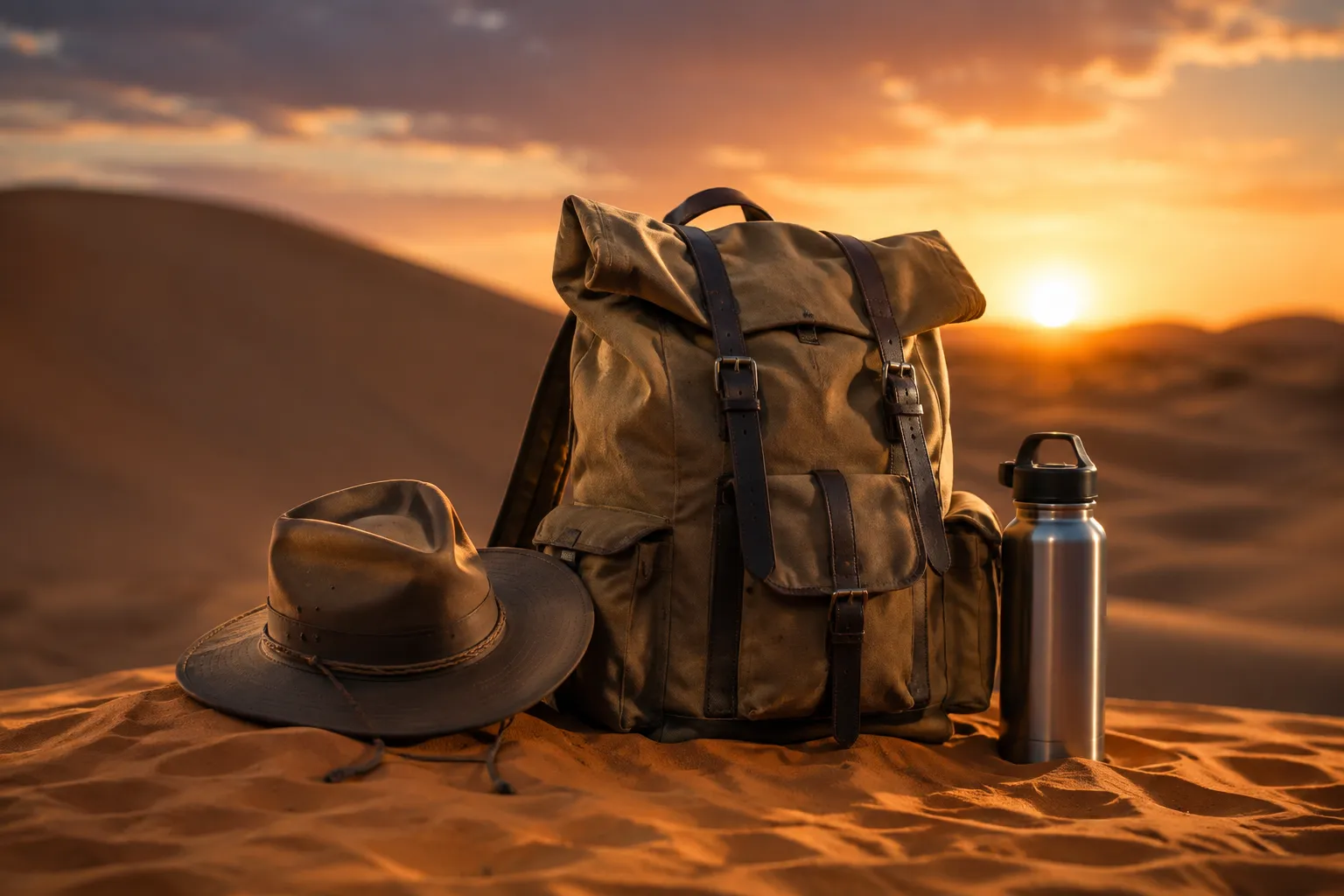
10 Things Every Silk Road Traveler Needs
Regardless of season, pack these. We have learned some of these the hard way.
Passport (original, not a copy)
Required for hotels, trains, and every attraction ticket
Chinese SIM card or eSIM
Buy at Dunhuang Airport or install Airalo/Nomad before departure
Alipay app with linked Visa/Mastercard
99% of payments in China are mobile. Cash is backup only.
VPN installed and tested
Install BEFORE entering China. Astrill and ExpressVPN work in Gansu.
Offline maps (Maps.me or Apple Maps)
Google Maps has location offset. Download Gansu offline maps.
Ziploc bags (gallon size)
Protect phone, passport, and camera from sand. Multiple uses.
Reusable water bottle
Buy bottled water and refill. 2-3L per person per day in summer.
Basic first aid kit
Band-aids, painkillers, anti-diarrheal. Pharmacies exist but language barrier is high.
Hotel business card with Chinese address
Show to taxi drivers. Single most useful item for getting around.
Tissue packs (small)
Public bathrooms rarely have toilet paper. Carry your own. Always.
Season-by-Season Packing Lists
Pick your travel season. Each list is built around the specific conditions you will face in the Gobi Desert. Essential items are marked — do not skip these.
Spring (Mar-May)
Typical temperature range: 5-28°C
Light jacket or windbreaker
Temperature swings 15°C between day and night
Long pants and jeans
Mornings are still cold; protects from sand
Short-sleeve shirts for daytime
May afternoons reach 28°C
Sunscreen SPF 50+ PA++++
Gobi sun is fierce even in spring
Sunglasses with UV protection
Glare off sand dunes is intense
Scarf or buff (neck gaiter)
Protection from occasional sandstorms in March-April
Comfortable walking shoes
Dune climbing + walking on fortress walls
Lip balm with SPF
Desert air has single-digit humidity
Light sweater or fleece
For Mogao Caves (15°C inside year-round)
Rain jacket (lightweight)
Rare rain in April-May, but possible
Summer (Jun-Aug)
Typical temperature range: 20-40°C
Lightweight, loose-fitting clothes
Cotton or linen. Nothing tight in 40°C heat.
Wide-brimmed sun hat
Baseball caps leave your neck exposed. Get full coverage.
Sunscreen SPF 50+ (reapply every 2h)
You will sweat it off. Bring double what you think you need.
UV-protective arm sleeves
Popular in China for a reason. Better than reapplying sunscreen.
Sunglasses (polarized)
Reduces glare and eye strain in extreme brightness
Electrolyte powder or tablets
Heat exhaustion risk is real. Add to bottled water.
Cooling towel
Wet it, snap it, wear it around your neck. Works surprisingly well.
Light jacket for Mogao Caves
Caves stay 15°C. The 25°C drop from outside feels freezing.
Sandals (for evenings only)
Do not wear sandals on dunes — sand burns feet at midday.
Insect repellent
Mosquitoes near Crescent Lake at dusk
Autumn (Sep-Oct)
Typical temperature range: 5-25°C
Layers: t-shirt + fleece + windbreaker
Start cold, strip layers as day warms up. Most versatile system.
Warm hat for mornings
October mornings can be 5°C. Wind chill on the Great Wall is real.
Sunscreen SPF 50+
Autumn sun is still strong at Gobi Desert altitude
Comfortable hiking shoes
Perfect season for walking. You will do more outdoor exploring than summer.
Sunglasses
Low-angle autumn sun is blinding at sunrise/sunset
Lip balm and hand cream
Humidity drops below 20% in October
Camera + tripod
Autumn has the best light for photography. Golden hour is magic.
Thermos for hot water/tea
Chinese hotels provide kettles. Carry hot tea for cold mornings.
Winter (Nov-Feb)
Typical temperature range: -10 to 5°C
Thermal base layers (top + bottom)
Non-negotiable. Uniqlo Heattech or equivalent.
Down jacket or heavy parka
-10°C with Gobi wind is bitter. Hotel heating is good, outdoors is brutal.
Warm hat that covers ears
Ears freeze first. Wind on Jiayuguan Fort walls is intense.
Insulated gloves
Touchscreen-compatible if you want to take photos
Warm socks (wool, 2 pairs)
Cold feet ruin any trip. Change socks midday if they get damp.
Insulated winter boots
Sand freezes in winter. Regular sneakers are not warm enough.
Scarf or neck gaiter
Pull up over your face in wind. Gobi winter wind is painful.
Moisturizer (heavy-duty)
Central heating + desert dryness = cracked skin. Apply twice daily.
Sunscreen + sunglasses
Snow on dunes reflects UV intensely. Yes, even in winter.
Power bank
Phone batteries drain faster in cold. Keep it in an inner pocket.
Desert Survival Tips
Hydration Rule
Drink 500ml of water per hour when active outdoors in summer. If your urine is dark yellow, you are already dehydrated. Bottled water is cheap (CNY 2-3 for 500ml). Stock up at convenience stores.
Sand Management
Sand gets into everything: shoes, phone ports, camera lenses, zippers. Ziploc bags are your best friend. Shake out your shoes before putting them on. Clean your phone's charging port with a toothpick every evening.
Temperature Swings
The Gobi can swing 20°C between day and night even in summer. Always carry a warm layer, even if it is 35°C when you leave your hotel. The 3-hour drive back from Yadan at 10 PM in a t-shirt and shorts is miserable.
Buy It There
You do not need to pack everything from home. Dunhuang has supermarkets, pharmacies, and outdoor shops near the city center. Sunscreen, insect repellent, basic medicines, and even warm layers are available. Save luggage space for things that are hard to find: specific medications, contact lens solution (hard to find), and your preferred brand of electrolyte tablets.